Change the line
Compare an open jacket with a closed one. Look at where the lapel, waist seam and hem lead your eye.
Body shape calculator
Explore how your bust, waist, hips and shoulders relate. Find a starting point for the clothes you love.
Your starting point
This is a descriptive estimate from the measurements you entered, not a diagnosis or a Kibbe or Kitchener result.
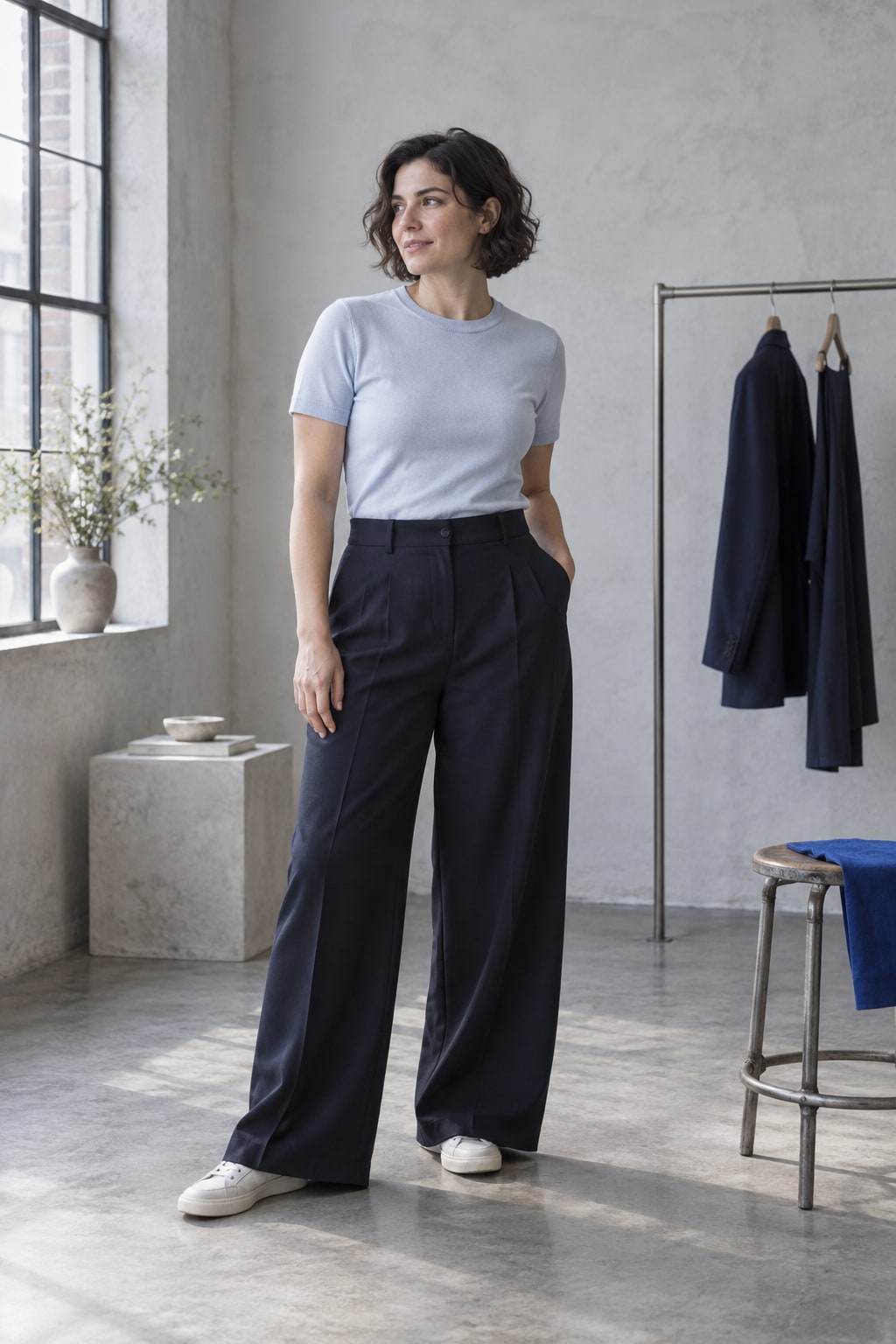
A guide, never a rule
A body-shape label is shorthand for a set of proportions. It can give you clothing ideas; it cannot decide what you should wear.
Try your measurements ↗Enter bust, waist and hip circumferences in the same unit. You can switch between inches and centimeters.
Compare shoulder and hip width from the front. A width is different from a circumference, so we keep this observation separate.
See your ratios and a suggested description. Borderline measurements or conflicting observations return mixed proportions.
This site uses a simple descriptive heuristic, not a universal sizing standard. Bust ÷ hips below 0.95 suggests pear; above 1.05 suggests inverted triangle. Within that interval, waist ÷ the smaller of bust and hips at or below 0.75 suggests hourglass; otherwise rectangle.
First, a waist at least 0.90 times the larger of bust and hips suggests apple. Within 0.01 of a relevant threshold, the result is mixed. A shoulder observation that conflicts with the suggested upper/lower balance also produces mixed proportions.
The displayed ratios are bust ÷ hips, waist ÷ hips and waist ÷ bust. They describe measurements, not health, attractiveness or a validated style identity. This version does not analyze photos or infer skeletal structure.
These familiar labels describe broad silhouettes. You may recognize more than one, and none requires a particular outfit.
| Shape | What you’re comparing | An idea to try |
|---|---|---|
| Hourglass | Similar bust and hips, a more defined waist | Try a shaped seam or a soft waist tie. |
| Pear | Hips larger than bust | Compare cropped and longer jacket hems. |
| Apple | Waist closer in size to bust and hips | Try fluid drape and adjustable waistbands. |
| Rectangle | Similar bust and hips, less waist contrast | Compare straight cuts with gentle shaping. |
| Inverted triangle | Larger bust or visibly broader shoulders | Try narrow and wide trouser legs. |
You may also see “spoon” used for a variation with more fullness around the high hip. This calculator does not separate that subtype: it does not ask for a high-hip measurement. The thresholds above belong to this tool, not to every use of these labels.
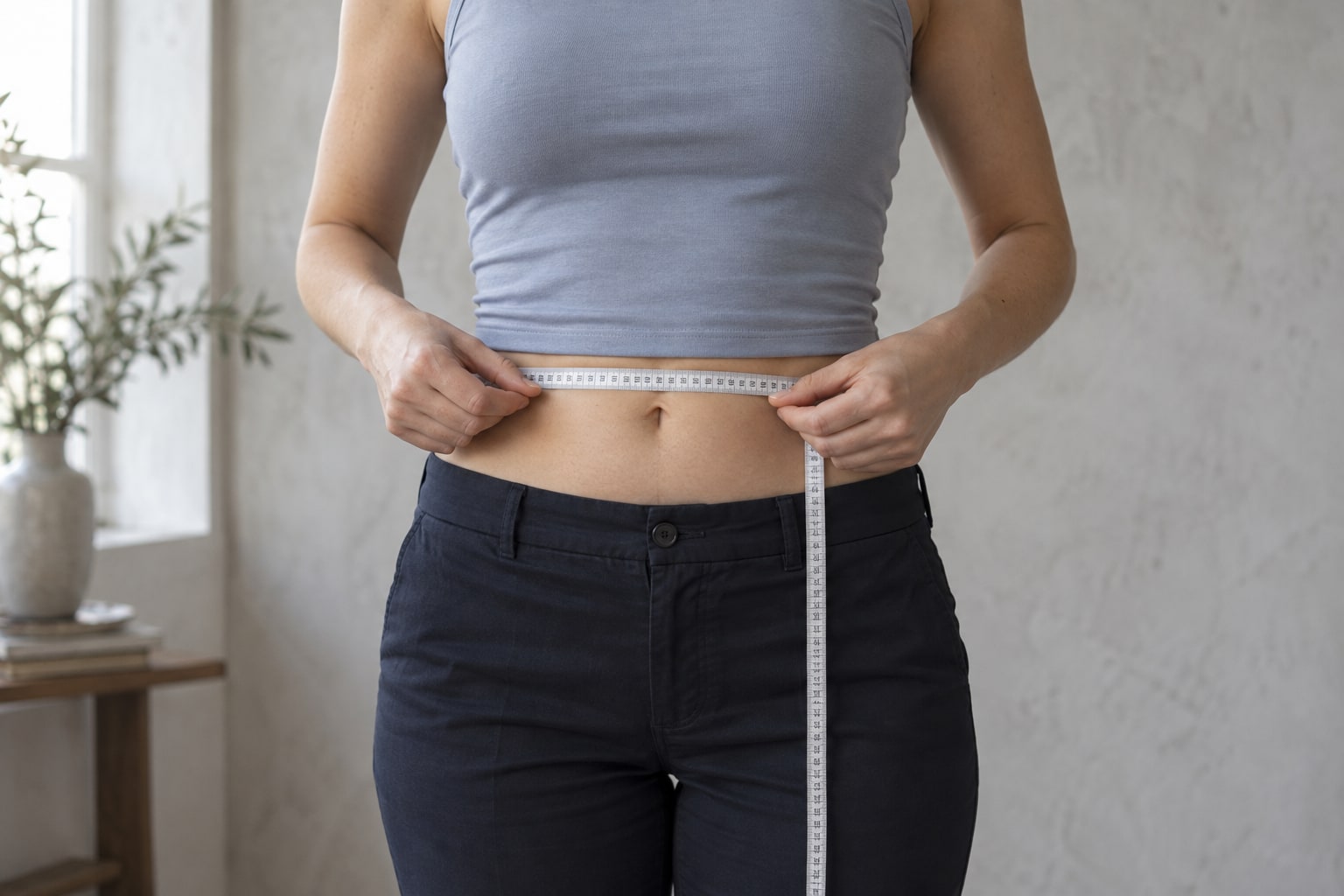
Use a flexible, non-stretch tape. Stand naturally, avoid bulky layers and keep the tape snug without pulling it tight.
Measure around the fullest part, keeping the tape level across your back.
Measure at your natural waistline, rather than the waistband of low-rise trousers. Breathe normally.
Measure the fullest part of your hips and seat. Check the tape from the side as well as the front.
Use the optional visual question. Keep your arms relaxed and compare shoulder and hip width from straight ahead.
Recheck uneven tape, bulky clothing or a changed stance. NMSU’s garment measurement guide explains tape placement and fit.
Two people with similar measurements can enjoy very different lines, textures and details.
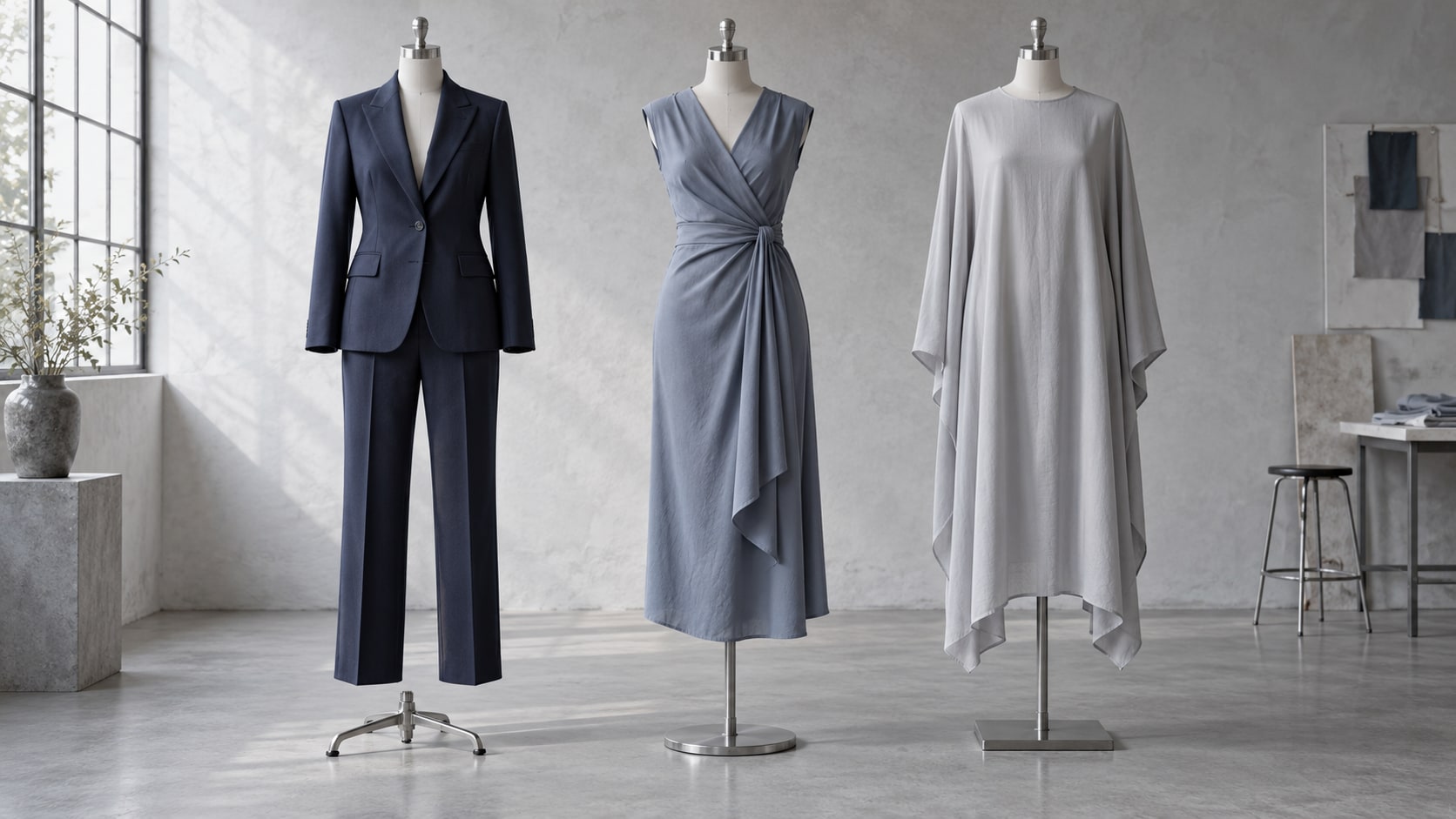
David Kibbe’s approach considers personal style through a broader image identity. It is not a label derived from a waist-to-hip ratio.
Explore David Kibbe’s Power of Style ↗John Kitchener’s system describes blends of style essences alongside personal coloring. A geometric body-shape result does not establish your blend.
Read about Kitchener’s approach ↗You don’t need to balance, hide or correct anything. Comfort and personal preference belong in every decision.
The reading room
Practical reading on proportions, fit and personal style.
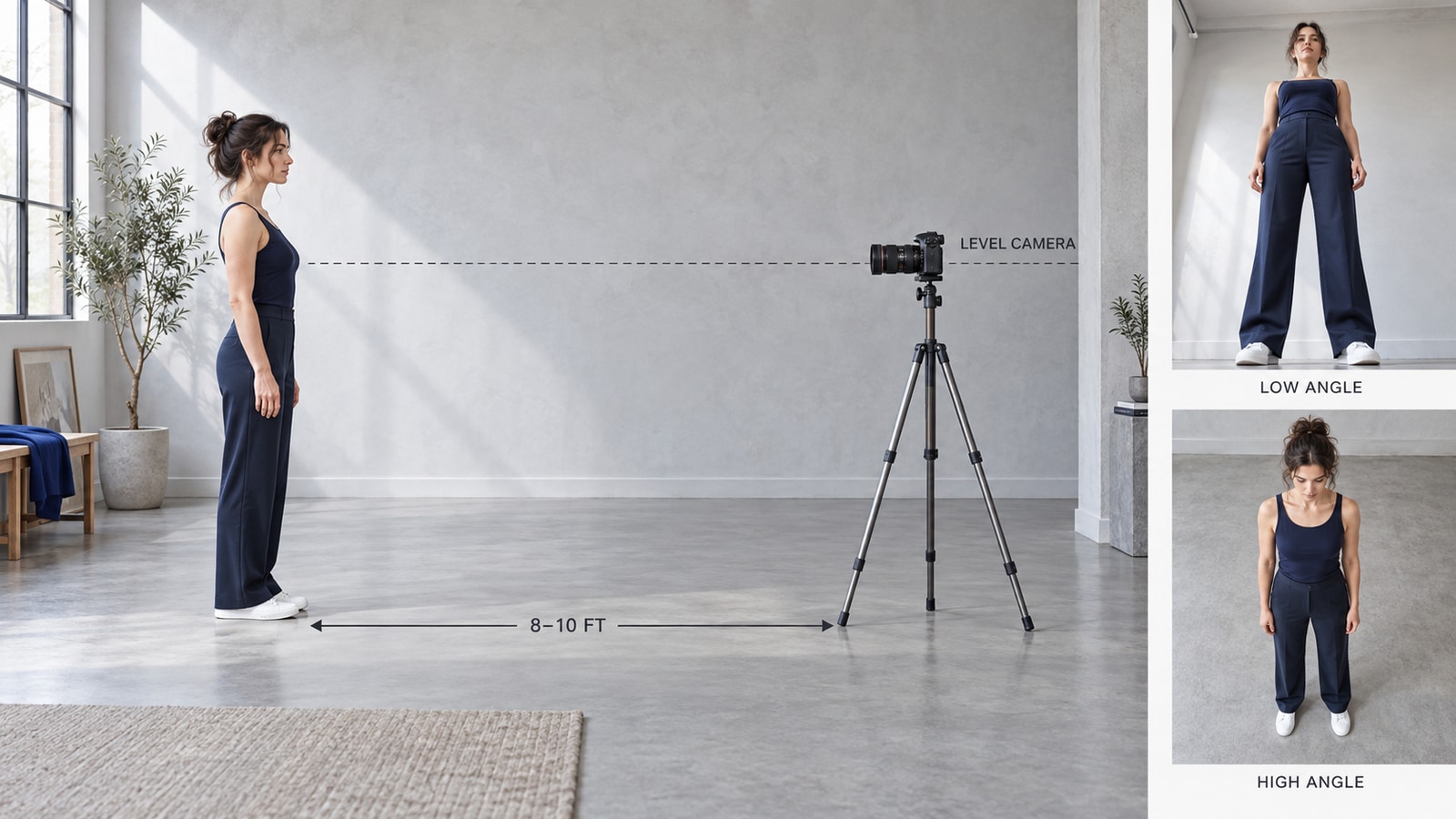
Explore your Kibbe Image Identity with a consistent full-length photo, three questions about clothing lines, and outfit comparisons instead of a rigid quiz score.

Meet the seven Kitchener style essences, understand how they can blend, and use their lines, textures, and details alongside body shape and Kibbe guidance.
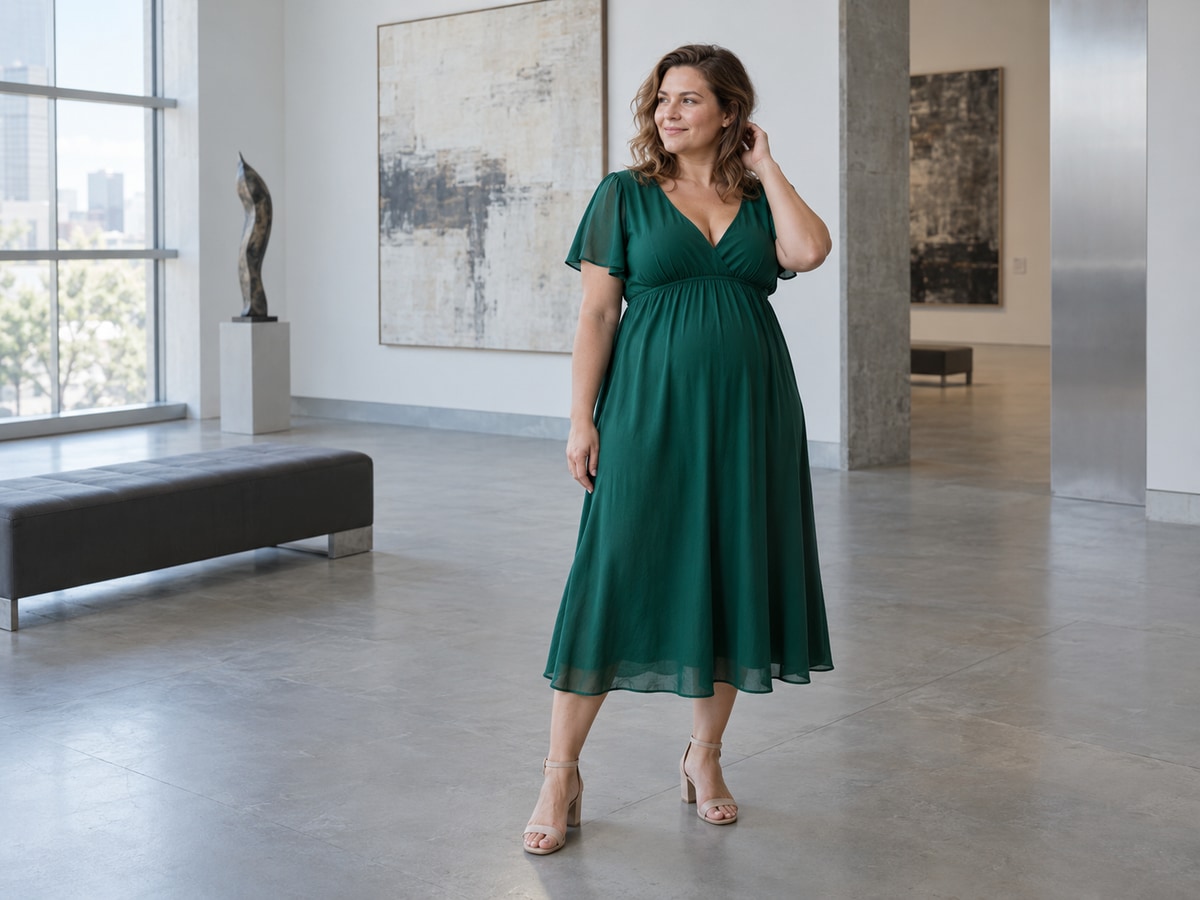
Understand apple body-shape proportions, compare bust, waist and hips, and explore empire-waist dresses, V necklines and comfortable drape.
Your measurements can change over time, so a result may change when you measure again. This calculator describes current clothing proportions; it does not recommend weight loss, exercise or changes to your body.
There is no single percentage that represents everyone. Results depend on who was measured and how each category was defined. A shape’s frequency does not make it more desirable or more useful for your wardrobe.
That is a useful result too. Small measuring differences can move a ratio across a boundary. Borrow ideas from both descriptions and judge the fit and comfort of the actual garment.
This version does not accept photos. The calculator uses the measurements and observation you enter on this page. A photo-based test is planned, but is not available yet.
No. Body-shape ratios, Kibbe Image Identities and Kitchener style essences are different ways of discussing style. Measurements alone do not assign either of those systems.
Less second-guessing.
More room to be yourself.