Body shape guide
Rectangle Body Shape: Athletic Proportions & Defining Waistlines
A rectangle body shape describes a relatively straight outline: shoulders and hips look balanced, while the waist has a gentler inward curve than in an hourglass outline. Bust, waist and hip measurements may be fairly close. A waist-to-hip difference of less than about 20% can be a rough clue, but it is not a universal definition or a verdict about how you should dress.
You can compare your own numbers with the measuring guide and the measurement calculator. The body-shapes overview shows where rectangle sits among the broad proportion labels.
Understanding Rectangle Silhouette Metrics
Look at three circumferences together: full bust, natural waist and full hip. For a rectangle outline, the waist changes less sharply from the bust and hips than it does in a pronounced hourglass outline. From the front, shoulders and hips may also appear similar in width, giving the torso a fairly continuous vertical line. “Athletic” is a common visual shorthand for this balanced outline; it does not describe your fitness, muscle mass or health.
Take measurements with a flexible, non-stretch tape: around the fullest part of the bust, at the natural waist, and around the fullest part of the hips. Stand normally, keep the tape level and snug without pulling it tight, and record every number in the same unit. New Mexico State University Extension’s pattern-fitting guide explains these positions and why measurements should be snug rather than tight.
This site’s calculator uses a descriptive rule, not the rough 20% cue above. After checking for an apple-leaning waist ratio and a pronounced upper- or lower-body difference, it suggests rectangle when bust and hips are within 5% of one another and waist ÷ the smaller of bust and hips is above 0.75. For example, bust 38 inches, waist 31 inches and hips 39 inches gives a bust-to-hip ratio of about 0.97 and a waist-to-smaller-measurement ratio of about 0.82. Near a threshold, or when a shoulder observation conflicts with the measurements, the calculator returns mixed instead. These thresholds belong to this tool; clothing patterns and style systems may use different definitions.
Circumferences cannot capture every part of a silhouette. Shoulder width is a visual observation here, not a fourth tape measurement, and posture, high-hip shape and garment fit can change the outline you see. If your waist is more sharply indented, compare the hourglass guide; if your waist sits closer to a fuller upper body, compare the apple guide. You do not need a perfect category match to choose clothes.
Styling Strategies: Creating Curves or Embracing Architectural Lines
There are two useful directions, and you can mix them. To make the waist a focal point, place a belt over a jacket or dress at a comfortable position, then compare the width above and below it. A peplum adds shape below the waist; a skirt with more fullness or a ruffled detail can add visible volume near the hips or upper body. These are changes to the garment’s outline, not changes to your body. The location of a belt or seam matters more than the body-shape label: check it while standing and sitting.
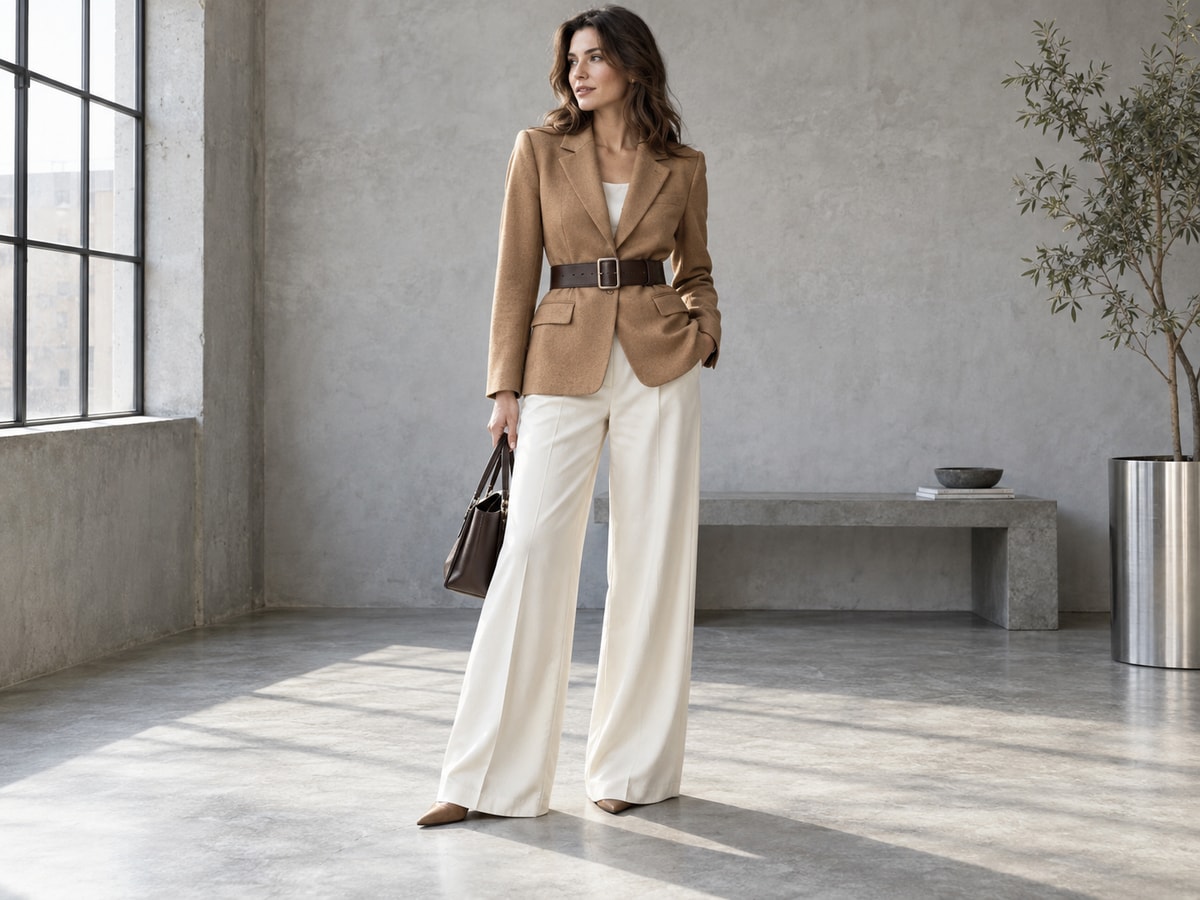
For a straighter, architectural look, try a tailored blazer with a clean front edge and straight or wide-leg trousers. The jacket can follow the torso without being cinched; the trouser line can continue the long vertical shape. Utah State University Extension’s clothing-design guide explains how structural lines, shape and texture affect what you see in an outfit. Its design-principles guide explains visual emphasis and proportion. Those ideas help you compare garment lines, but they do not prescribe one “correct” look for a body.
Try both directions with clothes you already own: belt the same blazer, then wear it open; compare the waist position, hip volume and overall line in the same lighting. Choose the version that feels comfortable and gives you the effect you want. A jacket still needs room through the shoulders and torso, and trousers need to fit at the waist and hips. New Mexico State University Extension’s pattern-alteration guide describes how fit depends on the garment’s actual dimensions and ease, so a rectangle label cannot replace trying pieces on.