Body shape guide
Spoon Body Shape: Traits, Shelf Hip Proportions & Styling Tips
A spoon body shape is a way to describe a defined waist and a fuller high hip that curves outward soon below the waist, creating a shelf-like outline. It is close to the pear or triangle family, but “spoon” draws attention to where the hip curve begins. These are clothing and proportion descriptions, not anatomical diagnoses or rules for what you should wear.
If you are comparing your own measurements, read the body-shapes overview and the measurement guide first. The site’s measurement calculator uses bust, waist and full-hip measurements; it does not measure the high hip or return a separate spoon result.
Spoon vs Pear: The Key Anatomical Difference
In a typical pear description, the line from a narrower waist widens more gradually toward the fuller hip. In a spoon description, the line turns outward higher, just below the waist, before continuing toward the lower hip. The comparison is about the visible contour, not the shape of a particular bone. Apparel shape research distinguishes spoon from triangle shapes using a high-hip measurement; two people with similar full-hip measurements can still need different room in a garment’s upper-hip area.
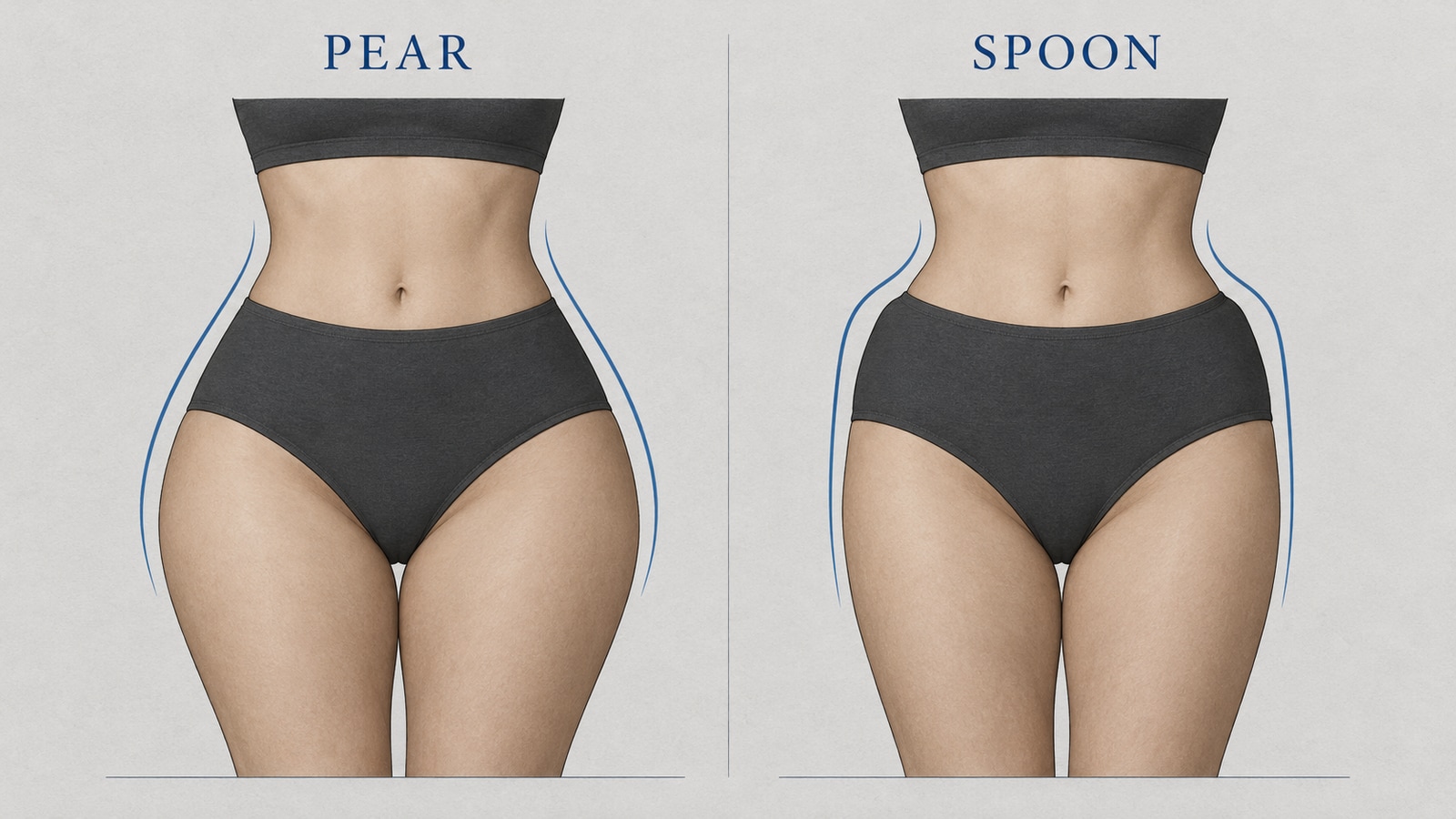
To compare the two on yourself, look at the side outline from waist to hip in close-fitting clothes that do not compress it. Then measure your natural waist, high hip and fullest hip with the tape level around the body. New Mexico State University Extension’s pants-fitting guide records the high hip about 3 inches below the waist and the full hip at its widest point. Those are useful fitting landmarks, not a universal formula that assigns a body-shape label. If the contour is between descriptions, use the fit observations without forcing a category.
Overcoming Fitting Challenges: Trousers & Dresses
When trousers fit across the high hip but leave space at the back waist, start by choosing enough room through the hips. Check that the waistband lies comfortably against the waist and that the fabric hangs smoothly when you stand, sit and walk. Try a shaped or contoured waistband that follows the change from waist to hip; a small amount of waistband elasticity can also be comfortable. If the hip fit is right but the waist still gaps, a tailor can assess a waist alteration. NMSU Extension’s pants guide recommends fitting at the hip and adjusting darts or side seams for the waist; its waistband guide explains shaped waistband construction.
For dresses, compare a style that follows the waist and upper hip with one that falls more freely from the hip. Check where a seam, pocket or skirt flare starts: a seam cutting across the fullest high-hip point may sit differently from one above or below it. A wrap or softly flared skirt can give you adjustable waist definition and room farther down, while a straighter dress may offer a cleaner line if it has enough hip ease. Choose the result you like in motion, rather than treating a spoon label as a dress code.
The practical test is simple: fit the widest area first, then assess the waist and rise separately. A trouser size that only closes at the waist but pulls at the high hip is a less useful starting point than one with comfortable hip room. NMSU Extension’s pattern-fitting guide treats waist, high hip and full hip as separate fitting points, which is why one circumference alone cannot explain every gap or pull.