Body shape guide
Inverted Triangle Body Shape: Shoulder-to-Hip Balance Guide
An inverted triangle body shape describes an outline that looks broader through the shoulders or bust than through the hips. The name is a visual shorthand for upper-to-lower proportions; it says nothing about health or what you must wear. If you want more visual weight below the waist, a skirt with fullness or wider-leg trousers can change the outline of an outfit.
Use the body-shapes overview to compare this description with neighboring shapes. For your own numbers, start with the measurement guide and the measurement calculator.
Proportions and Identification Benchmarks
Compare two different things: shoulder-to-hip width as seen from the front, and bust-to-hip circumference measured around the body. Shoulders can look wider than hips even when bust and hip circumferences are similar. A fuller bust can also make the upper body look more prominent without especially broad shoulders. Neither observation requires an “athletic” build or tells you anything about fitness.
To take the circumference measurements, keep a flexible tape level across the fullest part of the bust and around the fullest part of the hips; measure the natural waist separately. Hold the tape snugly without pulling it tight. New Mexico State University Extension’s fitting guide describes these measurement points and distinguishes shoulder and back widths from body circumferences.
This site’s descriptive calculator uses bust ÷ hips above 1.05 as its inverted-triangle cue: bust circumference is more than 5% greater than hip circumference. For example, a 40-inch bust and 37-inch hips give a ratio of about 1.08. This is the site’s rule, not a universal definition. The calculator first checks whether waist ÷ the larger of bust and hips is at least 0.90; a result within 0.01 of a cutoff, or a conflicting shoulder observation, returns mixed proportions. It does not calculate shoulder width from a tape measurement.
Look at your outline in clothes that fit without compressing the shoulders or hips. If shoulders and hips appear similar, compare the rectangle guide or the hourglass guide. A category can be a starting point even when your proportions do not match it exactly.
How to Style the Inverted Triangle Silhouette
For an outfit with more volume below the waist, try a pleated or flared A-line skirt. Its cut opens away from the waist and changes the garment’s lower outline. A wider or softly flared trouser leg offers another way to compare lower-body volume. Keep the fit comfortable at the waist and hips; fullness in the skirt or leg should come from the cut, not a waistband that pulls. Utah State University Extension’s clothing-design guide explains how cut and construction shape a garment’s silhouette.
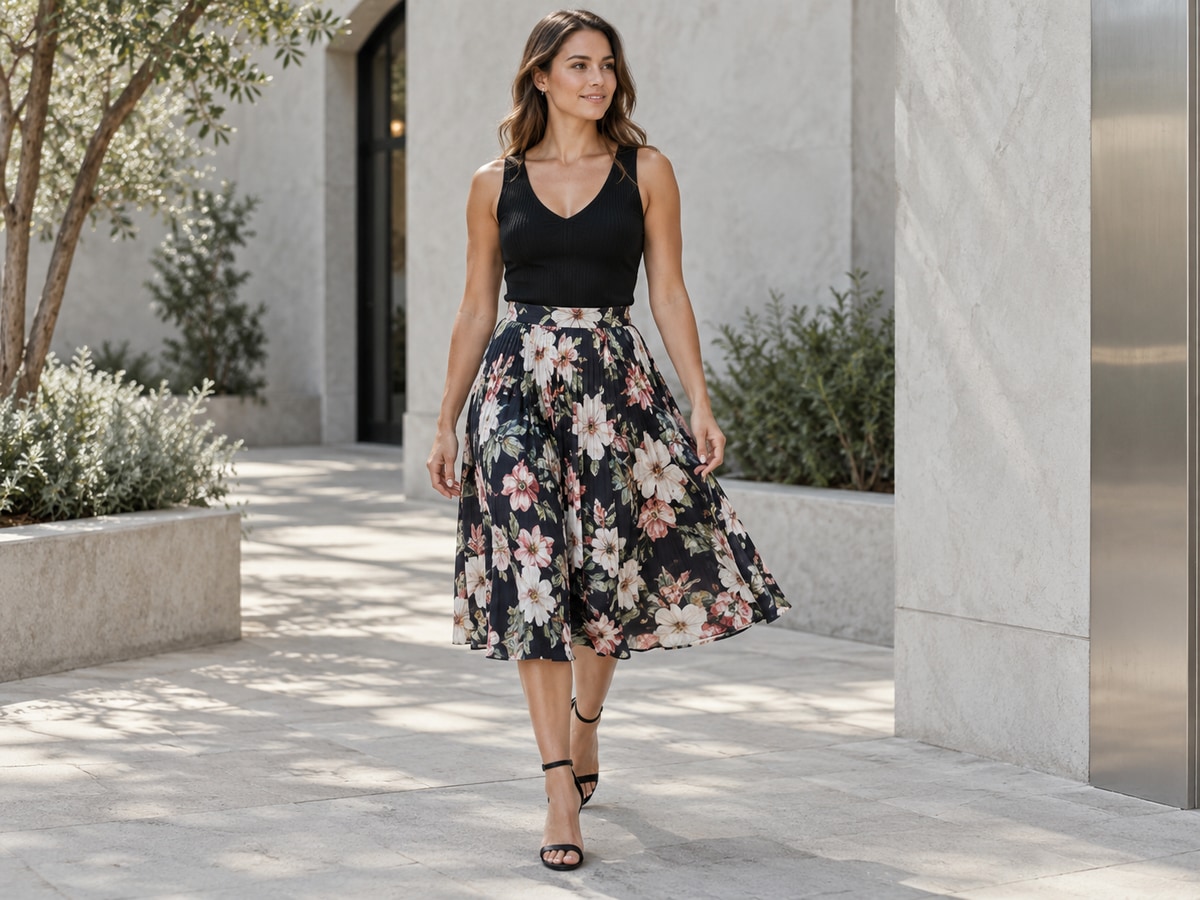
On top, a V-neck creates a diagonal line toward the center of the torso. A raglan sleeve runs from neckline to underarm instead of ending in a conventional shoulder seam; compare how that seam changes the line you see. A halter neckline is another option to try, though its exposed shoulder line may emphasize the shoulders on some garments. Fit and fabric matter more than the label on the neckline, so check each piece on your body.
A dark top with a lighter or patterned bottom is one way to shift attention downward. The pictured skirt uses pattern and pleats for that effect even though its ground color is dark; color is only one of several tools. Utah State University Extension’s design-principles guide describes how color, texture, line and added detail create emphasis and visual balance. Try a second combination with similar colors above and below to see which effect you prefer.
You may also prefer a strong shoulder line or a straight silhouette. Wear a structured jacket or slim skirt if you like it; a body-shape label does not require visual “correction.” Compare the same top with two bottoms while standing, sitting and walking, then choose the fit and outline that feel right to you.