Body shape guide
Apple Body Shape: Upper-Body Proportions & Flattering Cuts
An apple body shape describes a rounded outline with more fullness around the bust and middle, a less defined waist, and often comparatively slimmer hips and legs. It is a description of proportions, not a judgment about a body or a rule for getting dressed.
If you want to compare your own measurements, start with the measuring guide and measurement calculator. The body-shapes overview places apple alongside the other broad silhouette names.
Key Characteristics and Proportions
The most useful clue is the relationship between bust, natural waist and full hips. An apple outline may have a fuller bust or upper torso, with less change in circumference as you move through the waist. From the front, the line from the waist toward the hips may look relatively gentle rather than sharply indented. Legs can look slimmer in comparison with the middle, but no particular leg or arm size is required for the description.
Measure the bust at its fullest point, the natural waist and the fullest part of the hips with a flexible, non-stretch tape. Keep it level and comfortably snug, and use one unit throughout. New Mexico State University Extension’s fitting guide identifies these measurement points and explains how to take snug, rather than tight, measurements.
This site’s descriptive calculator checks the waist first: W ÷ max(B, H) at or above 0.90 suggests apple-leaning proportions, where B is bust, W is waist and H is full hips. For example, B = 40 inches, W = 37 inches and H = 39 inches gives 37 ÷ 40 = 0.925. The calculator marks a result mixed when it is within 0.01 of a relevant cutoff or when a shoulder-width observation conflicts with the measurement-based suggestion. These are this tool’s rules, not a universal definition of an apple figure.
Circumferences do not show where all fullness sits or how wide the shoulders look from the front. Two people with similar ratios can need different garment adjustments. If your waist is less close to your bust and hips, the rectangle description may be a useful comparison; the broader guide keeps the two patterns distinct without requiring a perfect match.
Flattering Cuts and Styling Heuristics
If you want fabric to fall loosely through the middle, try an empire-waist dress: its seam sits below the bust, so the skirt begins above the natural waist. Check that the seam itself sits comfortably and that the skirt has enough ease when you sit and move. A V neckline creates an angled line at the upper body; you can choose its depth to suit your own comfort. These details change the outline of an outfit, not your proportions.
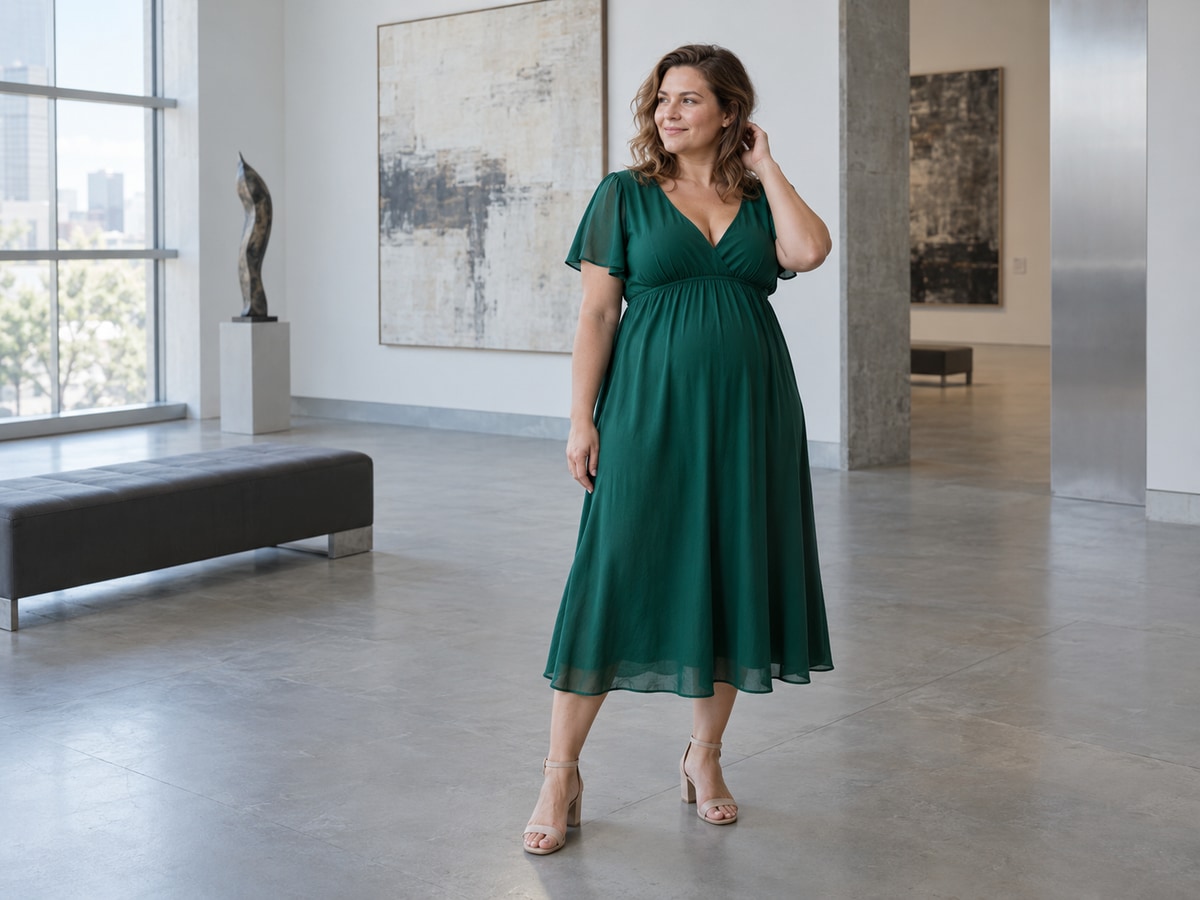
Compare a soft, fluid fabric with a firmer woven one in a similar cut. The softer fabric can drape around the torso; the firmer one may hold a more structured shape. An open jacket or a long, uninterrupted front edge can also create a vertical line if that is the look you want. Utah State University Extension’s guide to clothing design principles explains how line and emphasis affect an outfit’s appearance, while its design-elements guide distinguishes structural and decorative lines.
If you like drawing attention to your legs, compare a midi hem with a hem above the knee and notice how each works with the shoes you actually wear. You can equally choose a longer dress or a closer fit through the middle. The useful test is whether the neckline, seam, fabric and hem produce an outline you enjoy and leave room to move. New Mexico State University Extension’s pattern-alteration guide notes that garment ease depends on fabric, pattern and fit preference; a body-shape label cannot replace checking a garment on your body.